Roman Shades
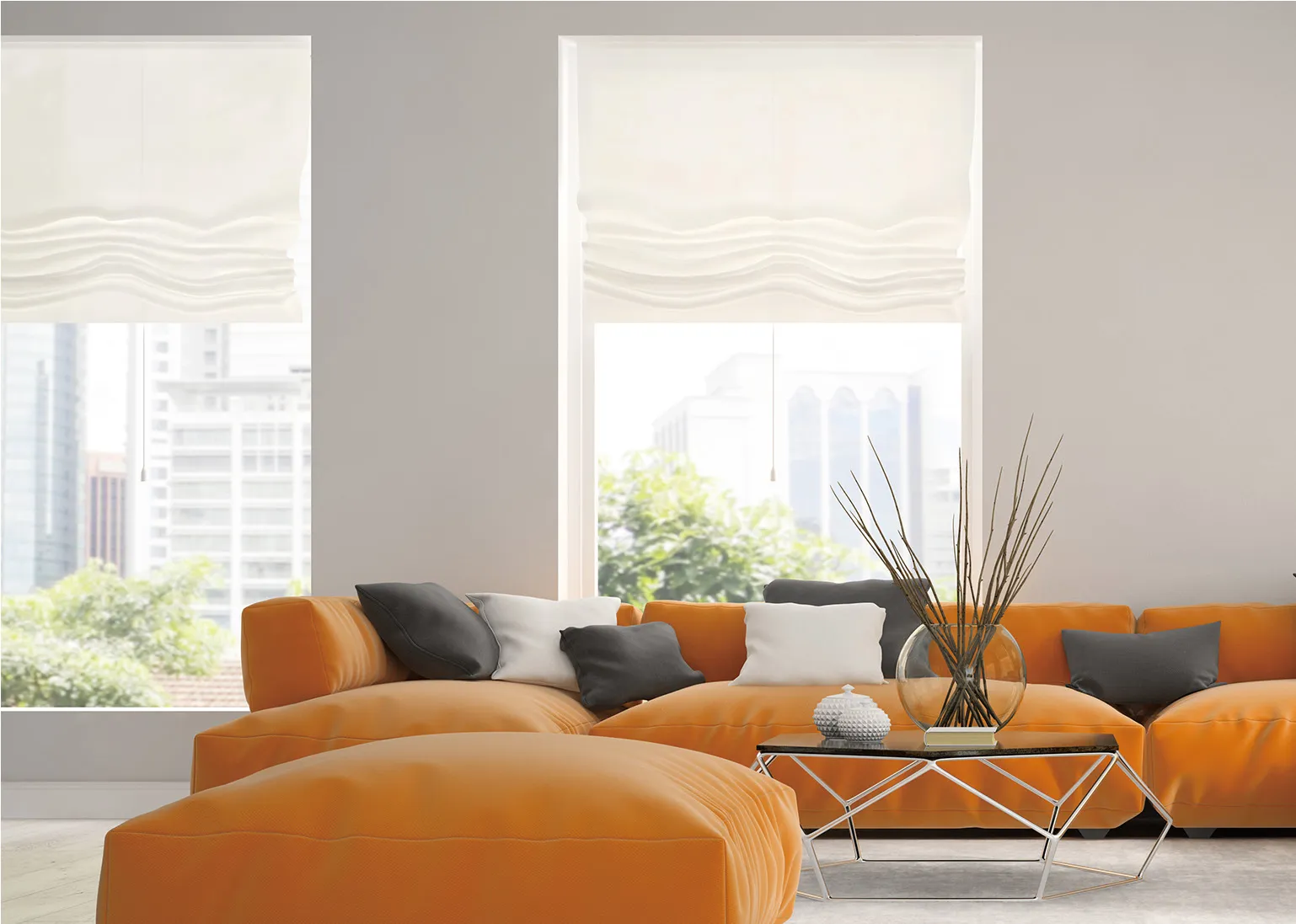
Soft folds. The closest a shade gets to drapery.
Fabric that gathers into horizontal folds as it lifts, and hangs flat when it is down. Roman shades bring the warmth of a curtain to a window that has no room for one, which is why they turn up in bedrooms and dining rooms far more than anywhere else.
Where it fits
When it's right
- The window wants fabric, but there is no wall either side to stack drapery onto
- It sits neatly inside a recess, where a curtain would crowd the room
- You want blackout without giving up the softness. It takes a blackout lining
- It is going next to side panels, where a hard treatment would fight them
Usually goes in
- Bedrooms
- Dining rooms
- Living rooms
- Bay windows
Where it doesn't
When it isn't
- You want the glass completely clear. A roman keeps its folds stacked at the top and never fully leaves the window
- A kitchen with a hob under it. It is real fabric with body and it holds cooking smells the way a curtain does
- A very wide opening. Past a certain width the panel is heavy enough that the folds stop hanging evenly, and it is better as two
Before you order
The choices that change the result
Two or three decisions do most of the work on this product, and they are all easier to make at the window than afterwards. This is what we talk about at the measure.
The lining is a bigger decision than the fabric
Unlined, the weave shows the light through it and the shade drifts slightly, which is the point if you want softness. Blackout-lined, it is a different object: heavier, holding a straighter edge, and darkening a room properly. The same face fabric gives two quite different windows and people are usually surprised by that at the estimate.
Inside or outside the recess
Inside keeps the window trim visible and looks built in. Outside covers the opening entirely, which hides an out-of-square frame and closes the light gap at the same time, and it makes a short window look taller because the stack sits above the glass rather than on it.
The stack is real, so plan for it
Raised, a roman is a band of gathered fabric across the top of the window, and on a short window that band can take a serious slice of the view. Mounting it above the opening is usually the fix. It is worth deciding before we cut, not after.
Made to order
What we can make
Every one of these is cut to your window, so this is the range rather than a list of sizes on a shelf. If what you need is not here, ask, because the answer is often yes.
| Width | About 118in on one shade. Wider than that is two shades on a shared headrail, set so the join reads as a seam rather than a gap. |
|---|---|
| Lining | Unlined for softness, lined for body, or blackout-lined where the room has to be dark |
| Fold style | Flat fold as standard, hobbled on request where you want the folds to show when it is down |
| Controls | Cordless lift, continuous chain loop, or motorised |
| Mounting | Inside the recess, outside over the trim, or on the ceiling |
Pricing depends on size, fabric and control type, so it is quoted per job rather than listed. The estimate is free and there is no obligation attached to it.
Installed
Roman jobs
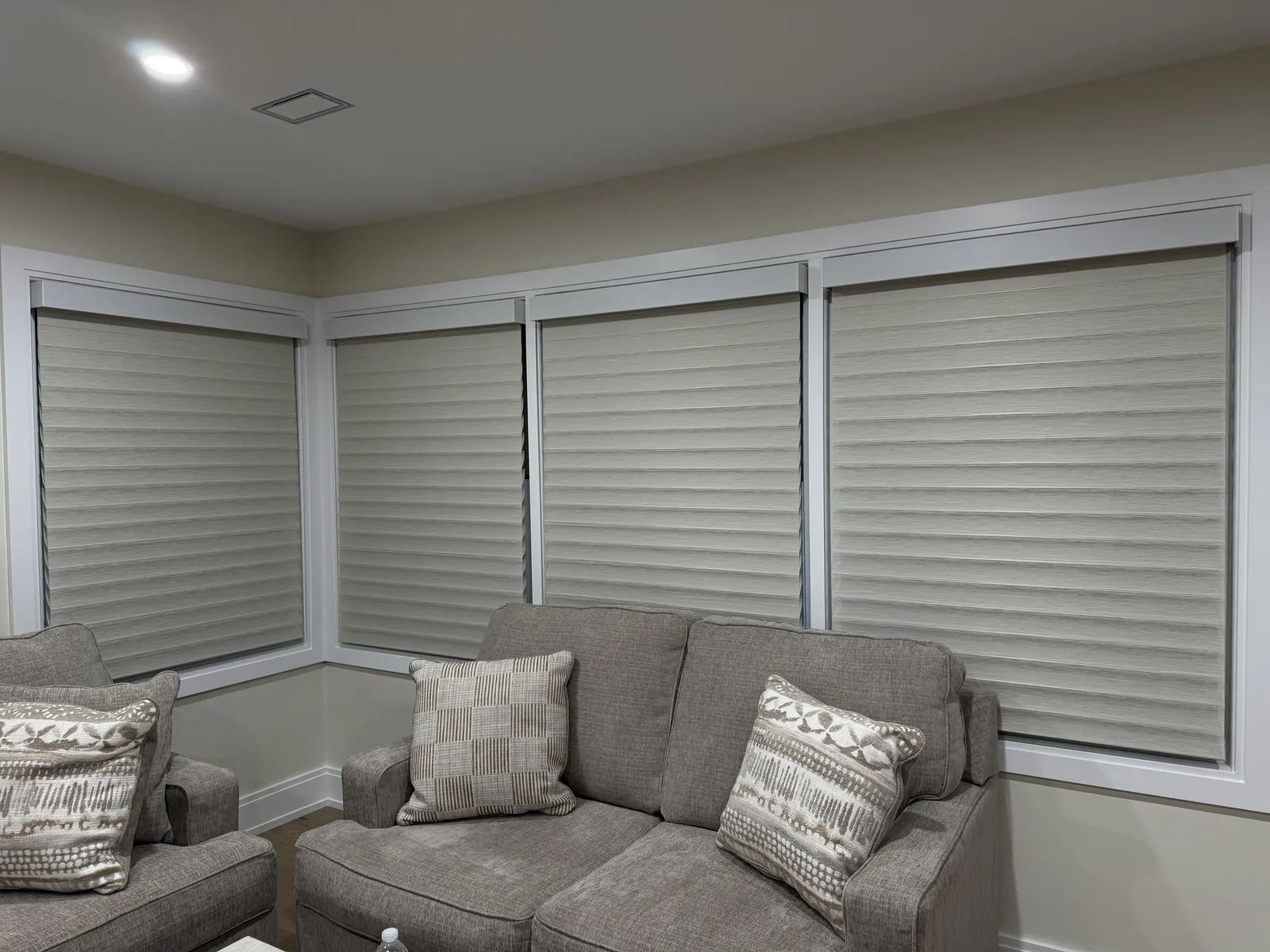
Roman shades wrapping a family room corner
Four openings turning a corner, all landing on the same line. A woven fabric keeps the folds soft under lamplight instead of going flat.
Natural woven fabric, inside mount
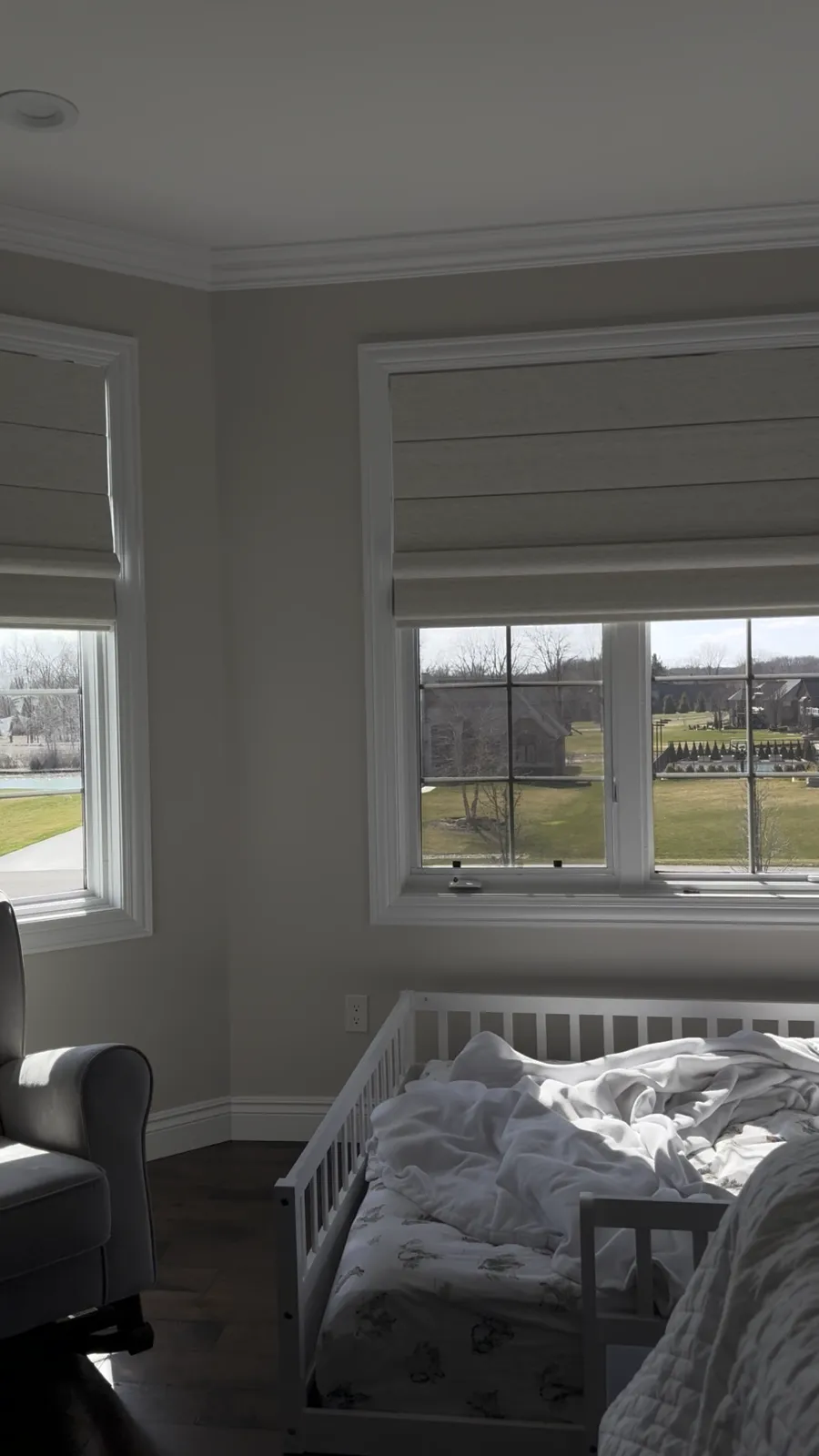
Roman shades on a corner in a child's room
Cordless, because there is a bed under the window. The weave still passes enough daylight to keep the room from going gloomy when they are down.
Natural weave, cordless, inside mount
Estimate for roman
Send a photo of the window and we'll tell you whether this is the right product for it, including when it isn't.
Also available
Other window coverings
Roller Shades
One clean line of fabric. The most versatile shade we hang.
Zebra Shades
Also called day and night. Alternating bands that tune the light.
Sheer Horizontal Shades
Shangri-La. Fabric vanes floating between two sheers.
Faux Wood Blinds
The look of stained timber, without the warping.
Aluminium Venetian Blinds
Thin metal slats. Precise light control, minimal stack.
Curtains & Drapery
Fabric with weight. Softens a room the way nothing else does.
Motorised Blinds & Shades
One remote, one app, or just your voice.
All eight
Compare the range →