Roller Shades
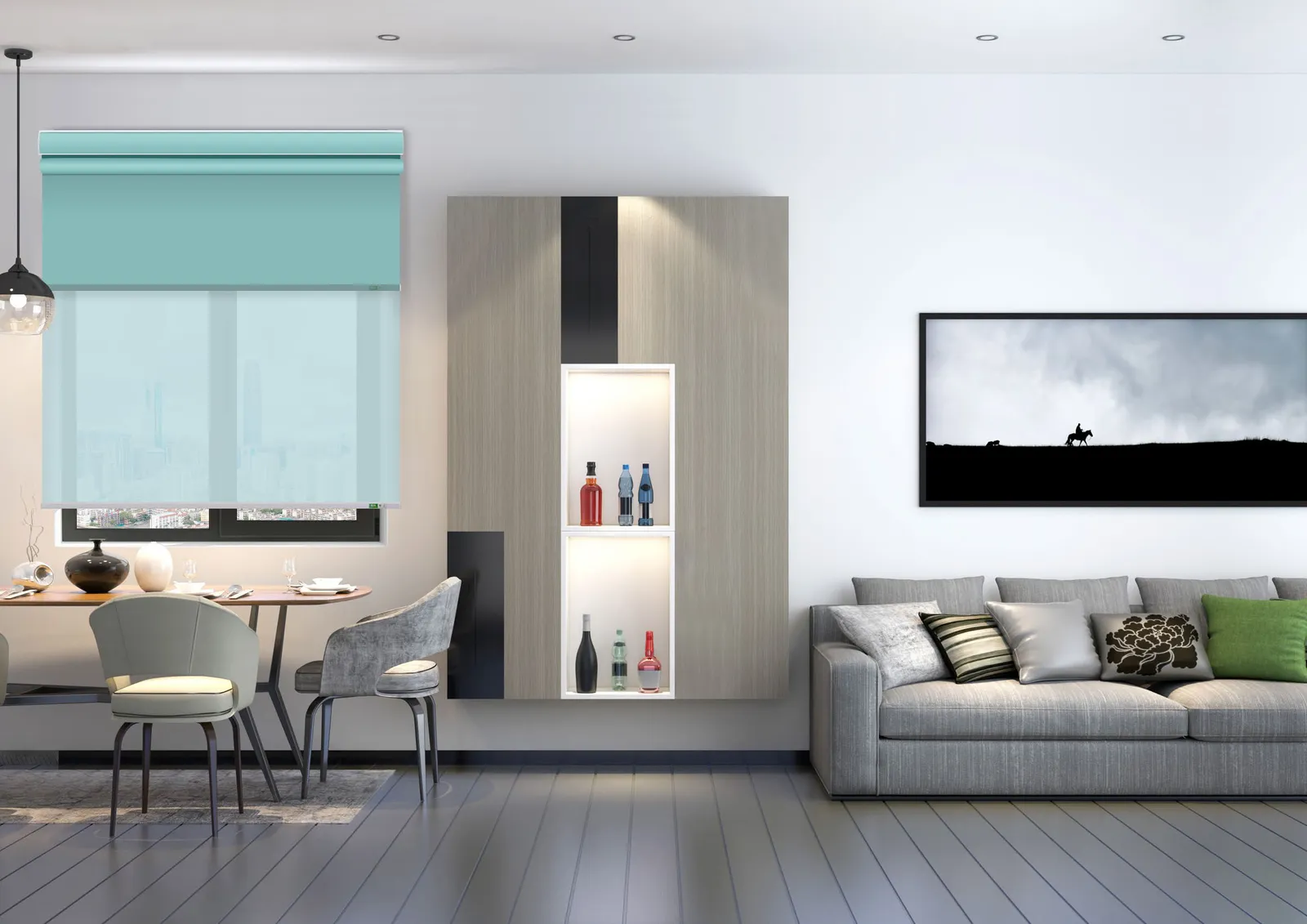
One clean line of fabric. The most versatile shade we hang.
A single panel that rolls onto a tube hidden in the headrail. Because the fabric does all the work, the choice of cloth decides everything. The same shade can be a barely-there screen that keeps the view, or a full blackout for a nursery.
Where it fits
When it's right
- You want to lose as little glass as possible. Nothing stacks smaller at the top of the window
- The room needs a specific amount of light rather than all or nothing
- It is going under drapery, where you want the softness and the light control separately
- There are window handles or a crank in the way. A reverse roll clears them
Usually goes in
- Living rooms
- Bedrooms
- Kitchens
- Home offices
Where it doesn't
When it isn't
- You want the window to feel soft. A roller is a flat panel and it will always read as one. That is roman or drapery
- It has to be properly dark and it is going inside the recess. A roller leaves a light gap down each side, which is invisible in a lounge and the whole problem in a nursery, unless we add side channels
- It is a wide bay in one piece. Past a single fabric width it becomes several shades and you will see where they meet
Side by side
The same shade, three fabrics
Roller shades are decided almost entirely by the cloth. This is one window with a transparent, a semi-blackout and a blackout fabric.

Transparent roller fabric, the view through it still visible

Semi-blackout roller fabric, light diffused and the view obscured
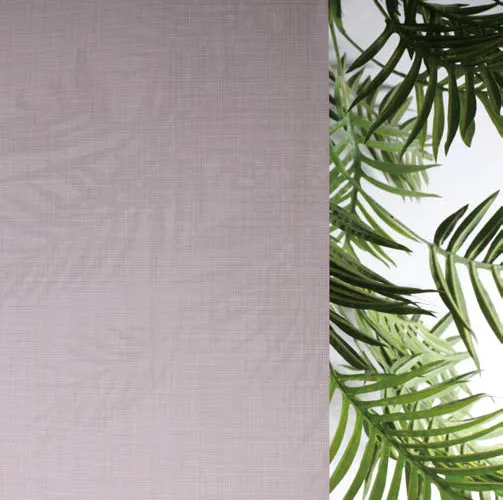
Blackout roller fabric, no light passing through
Before you order
The choices that change the result
Two or three decisions do most of the work on this product, and they are all easier to make at the window than afterwards. This is what we talk about at the measure.
How much you want to see through
This is the whole decision and it is made on the fabric, not the shade. Transparent keeps the view and most of the glare with it. Semi-blackout gives you privacy in daylight, though at night a lit room still shows a silhouette. Blackout is a bedroom answer, not a living room one: it is the only one that stops light, and it also stops the view entirely.
Which way it rolls
Forward roll drops the fabric off the back of the tube, closest to the glass, which is tidier and keeps the gap small. Reverse roll drops it off the front, which clears window handles, cranks and deep sills, at the cost of a slightly wider gap at the top. We decide this at the measure, looking at the window.
Whether the light gap matters
Every inside-mounted roller leaves a few millimetres of daylight down each edge. In most rooms nobody notices. In a nursery or a shift worker's bedroom it is the reason the shade failed. Side channels or an L-shaped blocker close it, and they have to be planned at the measure rather than added later.
Made to order
What we can make
Every one of these is cut to your window, so this is the range rather than a list of sizes on a shelf. If what you need is not here, ask, because the answer is often yes.
| Width | About 118in on one shade. Wider than that is two shades on a shared headrail, set so the join reads as a seam rather than a gap. |
|---|---|
| Fabric | Transparent, semi-blackout and blackout, in the same shade and the same hardware. Screen fabrics too, where the job is glare rather than privacy |
| Roll direction | Forward, sitting close to the glass, or reverse to clear handles and cranks |
| Light gaps | Side channels or an edge blocker where a room has to be genuinely dark |
| Headrail | Left bare, capped in white, grey or black, or wrapped in the same fabric as the shade |
| Controls | Chain, cordless with no hanging cord at all, or motorised by remote, app or voice |
| Mounting | Inside the recess, outside over the trim, on the ceiling, or on the wall |
Pricing depends on size, fabric and control type, so it is quoted per job rather than listed. The estimate is free and there is no obligation attached to it.
Installed
Roller jobs
Every roller job we have photographed. All of them are ours, measured and installed by the person who came to the window.
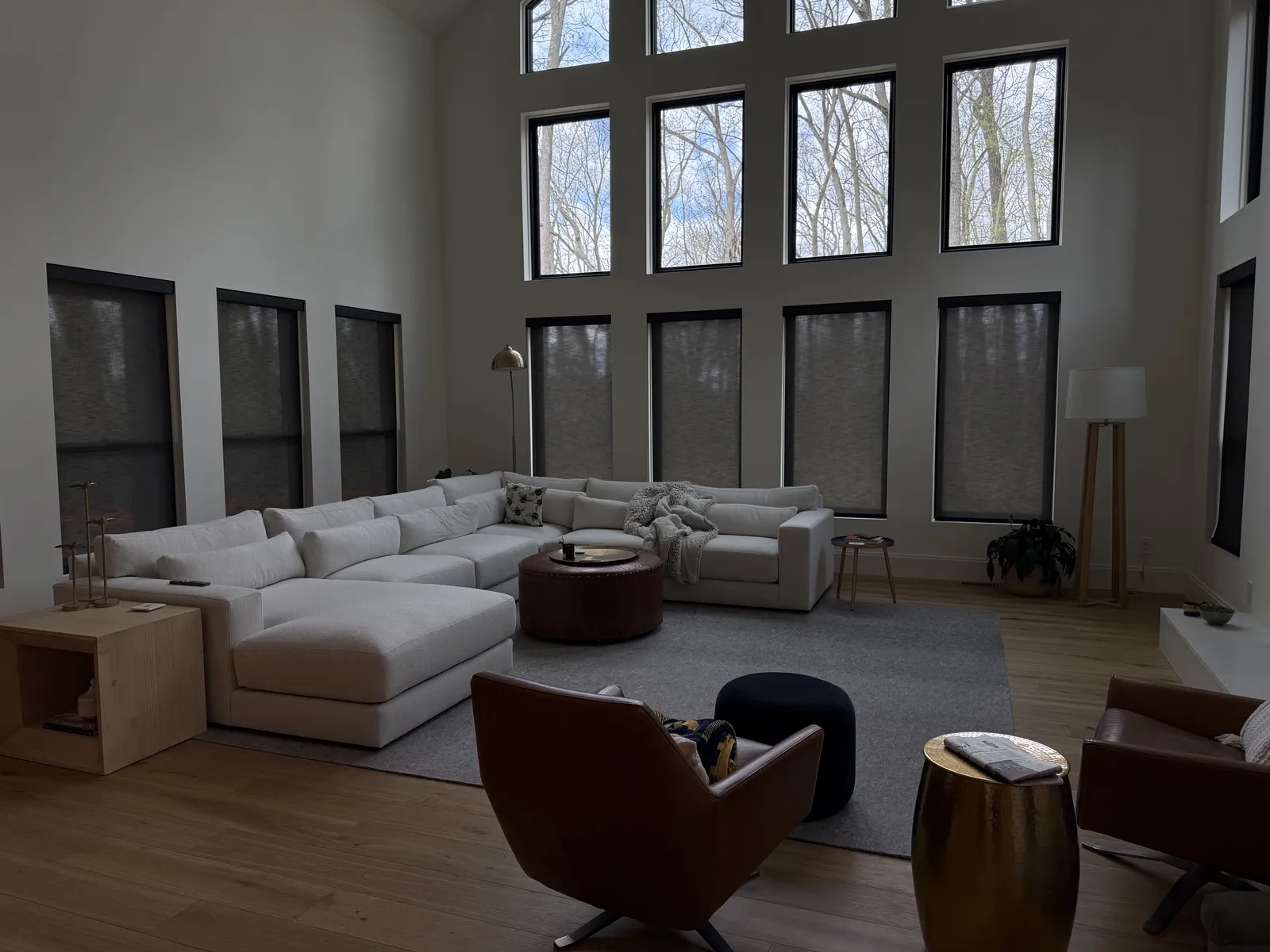
Living Room Solar rollers across a double-height great room
Dark solar screen, inside mount
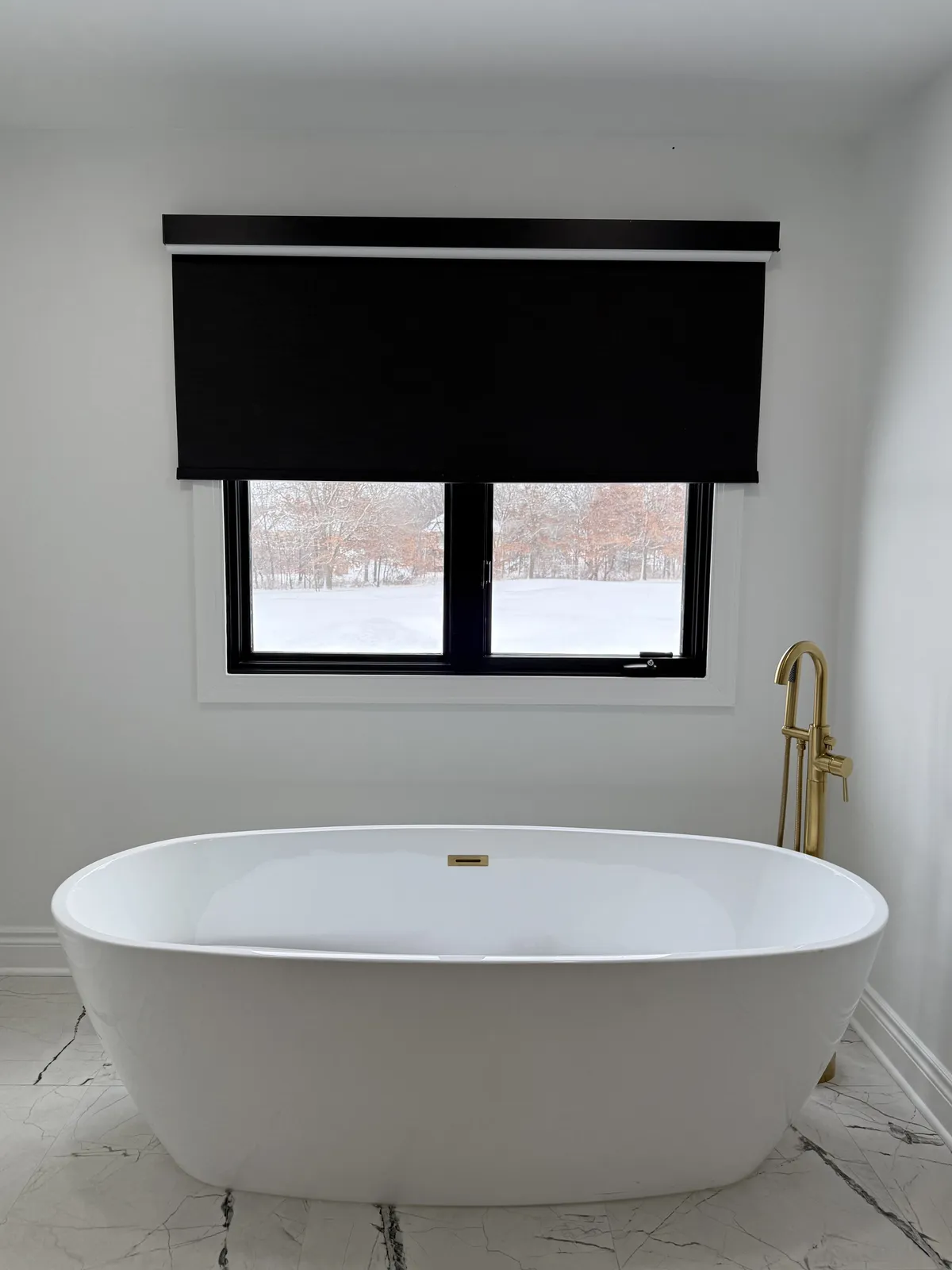
Bathroom Blackout roller over a freestanding tub
Blackout roller, outside mount with fascia
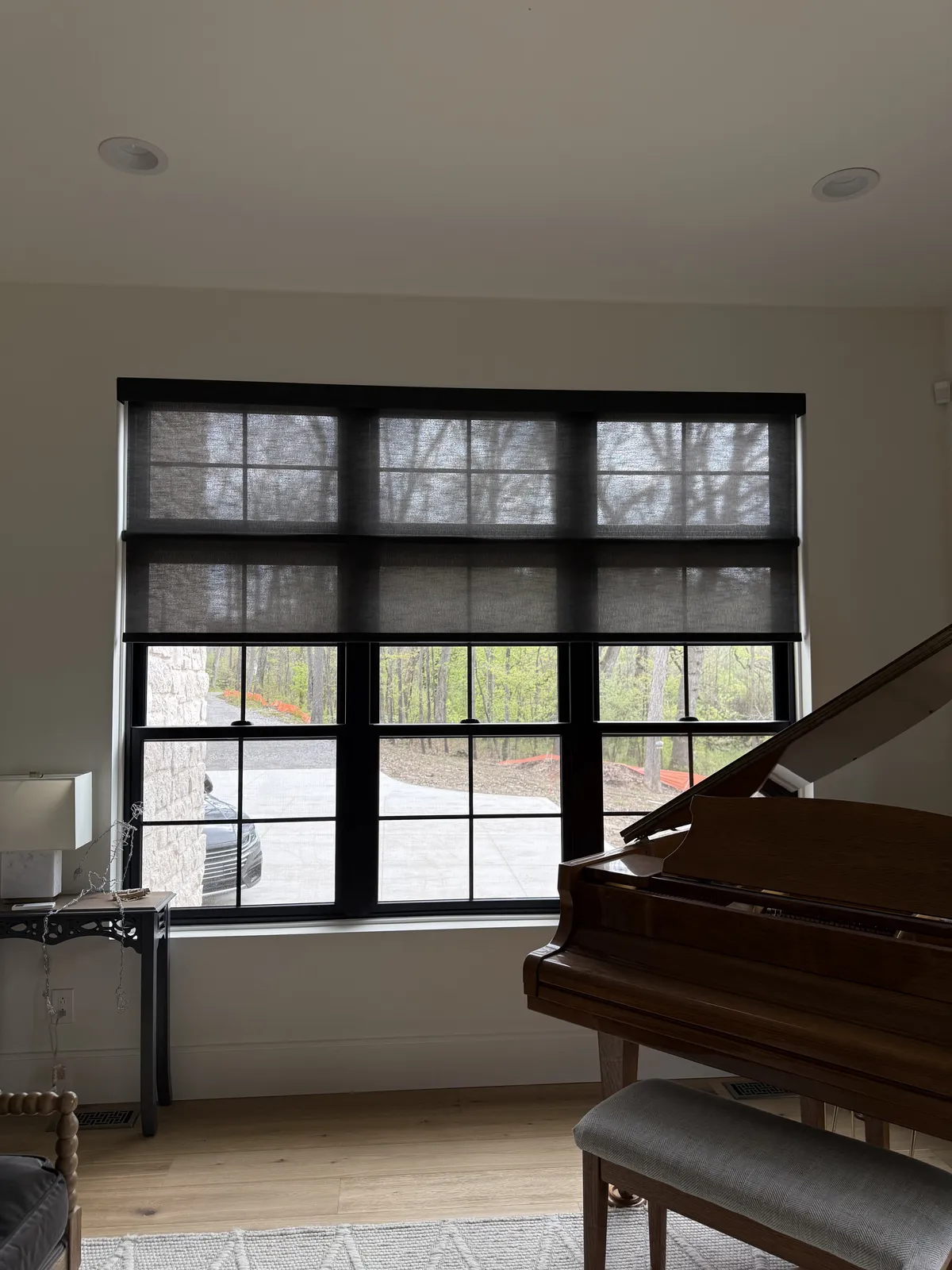
Living Room Solar rollers on a black-framed grid window
Dark solar screen, inside mount
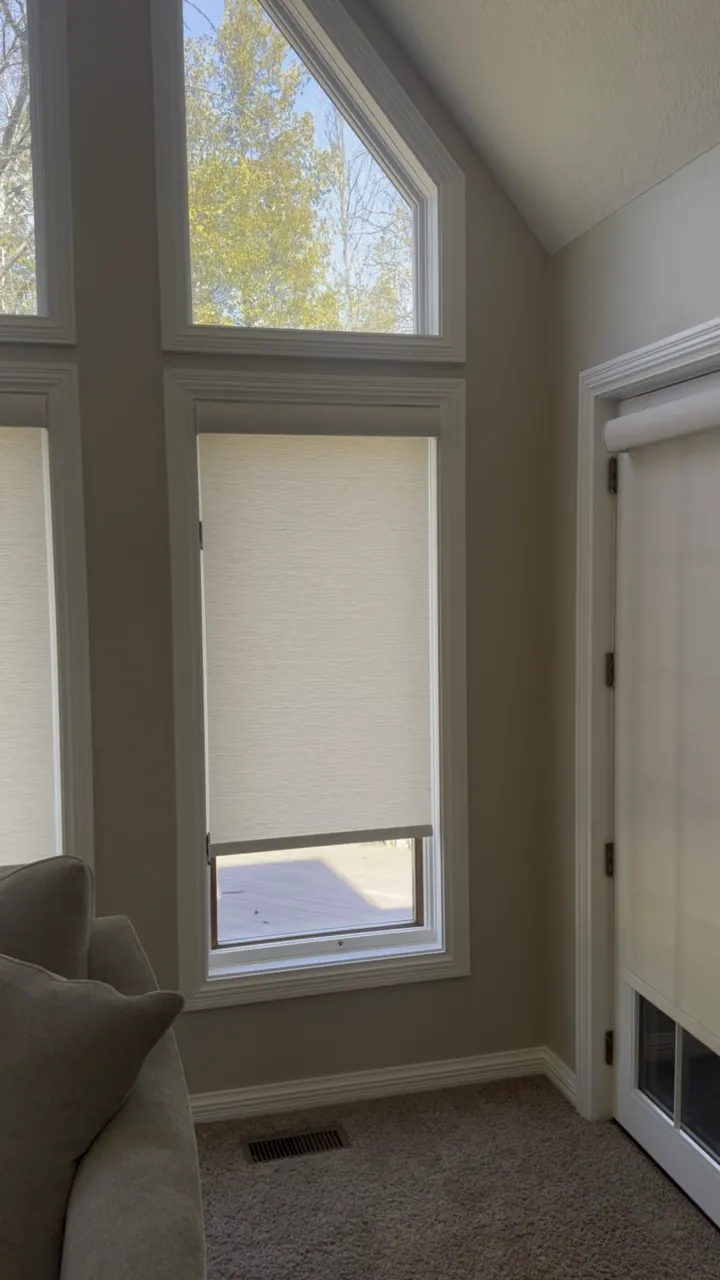
Living Room Rollers under a raked gable window
Light-filtering roller, inside mount
- +11
All 15 installs, filtered by product and room
See the full gallery
Estimate for roller
Send a photo of the window and we'll tell you whether this is the right product for it, including when it isn't.
Also available
Other window coverings
Zebra Shades
Also called day and night. Alternating bands that tune the light.
Roman Shades
Soft folds. The closest a shade gets to drapery.
Sheer Horizontal Shades
Shangri-La. Fabric vanes floating between two sheers.
Faux Wood Blinds
The look of stained timber, without the warping.
Aluminium Venetian Blinds
Thin metal slats. Precise light control, minimal stack.
Curtains & Drapery
Fabric with weight. Softens a room the way nothing else does.
Motorised Blinds & Shades
One remote, one app, or just your voice.
All eight
Compare the range →